|
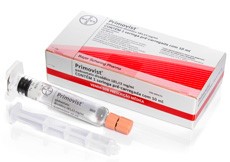
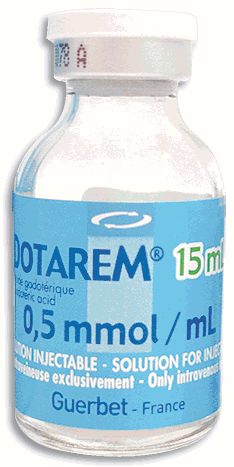
Gadolinium based contrast agents When performing an MRI, the physician might prescribe MRI contrast agent to be given as the patient is undergoing the scan. One of the most widely used being Gadolinium chelating agent which can be injected into the veins as well as orally ingested. As the name suggests, the contrast agent is capable of enhancing the clarity of the image and bring out possible abnormalities (i.e. brain tumors). This is due to the fact that the contrast agent will be dispersed throughout the body via the circulation flow and perfused into the spaces between the cells. Therefore, any abnormalities can be highlighted.
Gadolinium based contrast agents can be further divided based on the following properties:
General Usage Instruction
Common Side Effects After Injection Common side effects which can be considered as normal response, usually not long-lasting, include pain in the area of injection, low blood pressure, mild allergic reactions on skin, mild headache, and slight nausea. Medical attention is usually not required. Study has found that these symptoms only appear in 0.04 percent of patients (total = 450000). Most common of these being mild allergies and nausea. Nephrogenic Systemic Fibrosis This can be considered the most severe side effects after contrast agent injection. It has been scientifically proven that patient with various degrees of kidney insufficiency is not capable of filtering the contrast agent out of the body efficiently. The accumulation of the agent within the body can induce nephrogenic systemic fibrosis (NSF) resulting in thickening and hardening of the skin, typically on the arms and legs and sometimes on the body. Therefore, for individuals that require contrast agent, blood test with kidney function scoring must be done. Glomerular filtration rate of less than 30 ml/min/1.73m2 is considered as severe. Those with kidney transplant are also at risk depending on the duration. |